Caslon House Publishing
Publishers of the American story.
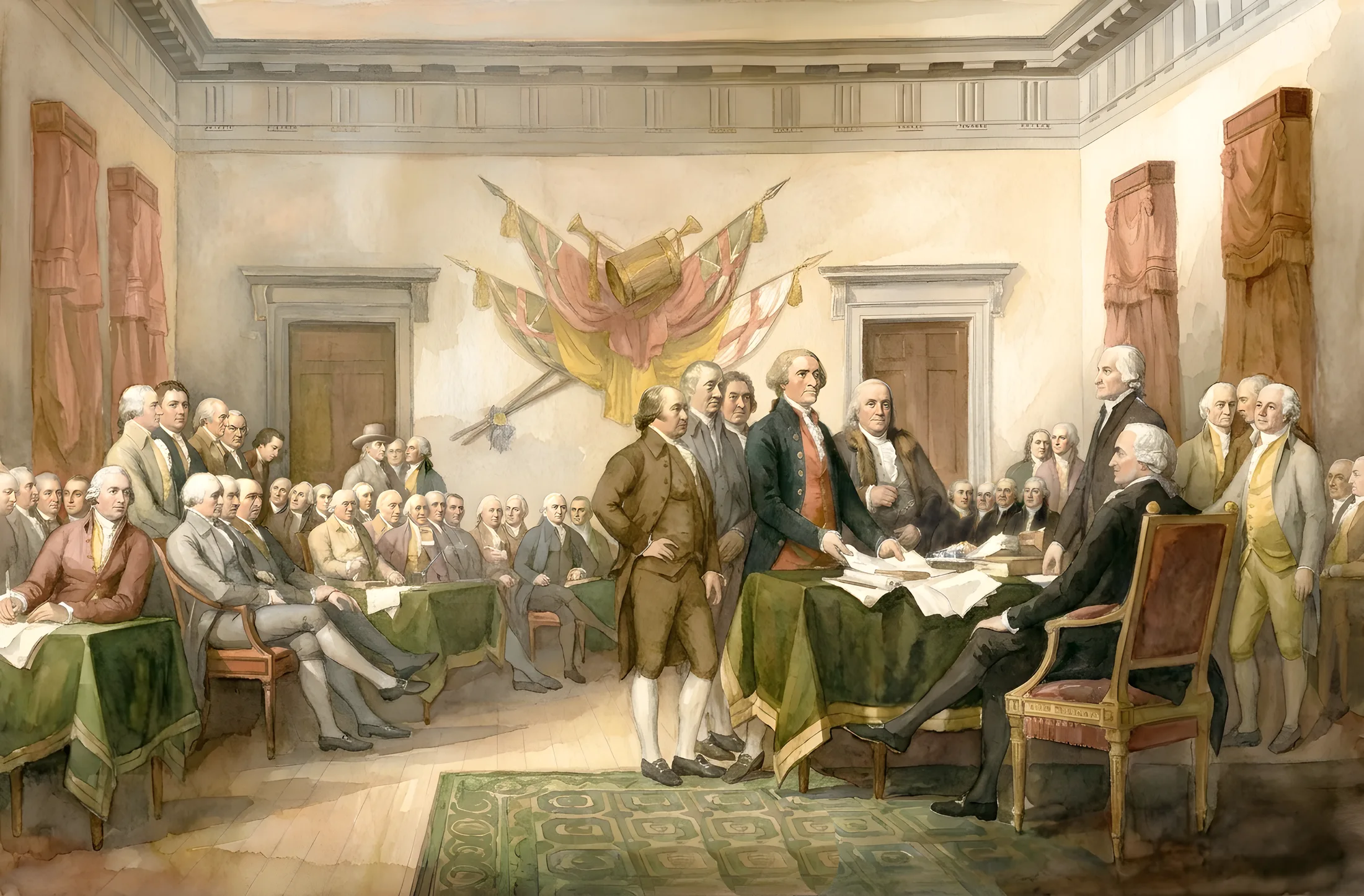
After John Trumbull, Declaration of Independence, 1818 · Plate from the forthcoming edition
The Name
The type of the founding.
In 1759, Benjamin Franklin brought William Caslon’s type to America. Seventeen years later, on the night of July 4, 1776, the Philadelphia printer John Dunlap set the first printed copies of the Declaration of Independence — in Caslon. The line at right is his. This house is named for that type: the letters the republic first read itself in. The house is new. The standard it answers to is not.

The House
Built the way the record deserves.
-
I
Real artifacts
Every plate begins as a genuine artifact — a painting, a map, a document — never an invention in period dress.
-
II
Museum provenance
Sources are named on the page: the artist, the year, the institution that holds the original.
-
III
Verified
Dates, names, and quotations are checked against the primary record before they are printed.
-
IV
Made to last
Full-color plates, generous trim, type set with care — books meant to be kept and handed on.
Forthcoming
Coming for America’s 250th.
A premium, full-color illustrated American history — a museum tour in a book. The nation’s paintings, maps, and documents, reproduced at scale and told straight. In production now.
Beneath: John Mitchell, A Map of the British and French Dominions in North America, 1755 · Library of Congress